
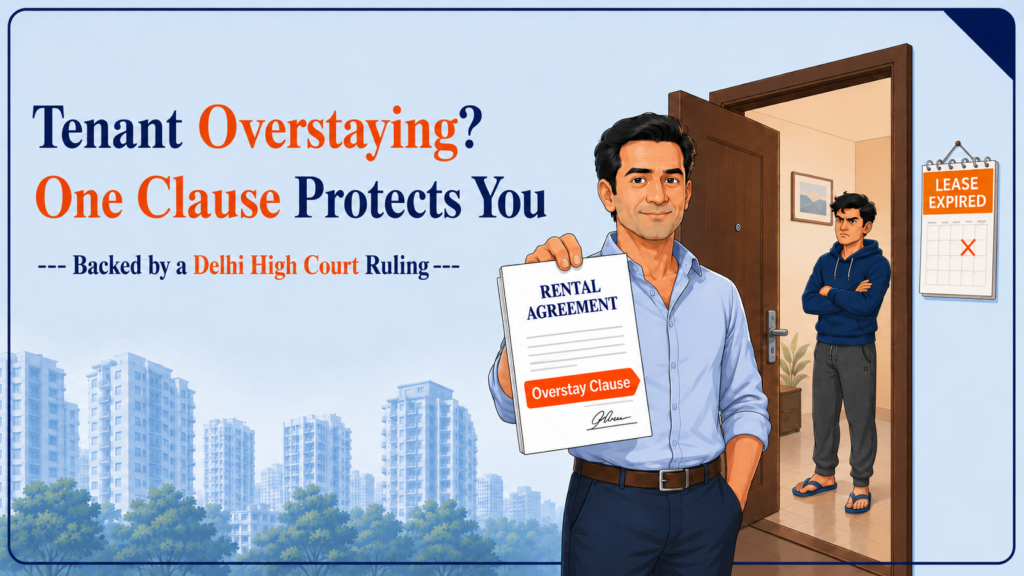
A tenant asking for “just a few extra days” after the lease expires may seem harmless. But if those few days turn into weeks or months, it can quickly become a stressful situation for any property owner.
A recent Delhi High Court ruling (Delhi HC) has once again highlighted why a well-drafted Rental Agreement is one of the most important documents in any tenancy. More than just recording rent and security deposit, a Rental Agreement should clearly define what happens if the tenant overstays, how rent revisions work, and how lease renewals should be handled.
What Was the Delhi High Court Case About?
The case involved a commercial property where the Lease Agreement clearly included a 20% Rent Escalation Clause after a specified period. As the lease came to an end, the tenant requested a little extra time to vacate the premises, explaining that they needed a few more days to complete the shifting process and move out. During this extended stay, the tenant argued that the earlier rent should continue to apply until the property was vacated.
The landlord, however, disagreed, pointing out that the Lease Agreement already contained a valid Rent Escalation Clause and that the revised rent should apply while the tenant continued to occupy the property.
The Delhi High Court clarified that where a Lease Agreement contains a valid Rent Escalation Clause, the agreed terms continue to apply. The judgment did not give landlords unrestricted authority to increase rent whenever they wish. Instead, it reinforced an important principle: the written agreement governs the relationship between both parties.
For property owners, the takeaway is simple—clear documentation can prevent unnecessary disputes later.
Why Rental Agreements Matter
For many property owners, renting out a property feels like a simple process. A tenant is selected, the rent and security deposit are agreed upon, and both parties sign the Rental Agreement. Everything appears to be in place.
However, challenges usually don’t arise at the beginning of a tenancy—they arise when something unexpected happens. A tenant may request extra time to vacate, rent payments may get delayed, maintenance responsibilities may become unclear, or both parties may have different expectations regarding lease renewal.
In such situations, verbal conversations often lead to confusion because each party remembers the discussion differently. A well-drafted Rental Agreement removes this uncertainty by clearly defining the responsibilities and rights of both the landlord and the tenant.
Instead of relying on assumptions, both parties can simply refer to the Rental Agreement. This not only helps avoid misunderstandings but also makes discussions more transparent and professional.
A Rental Agreement should therefore be viewed as more than just a legal document. It is a practical guide that outlines what happens throughout the tenancy—from possession and rent payments to renewals, security deposits, and eventual handover of the property.
The clearer the agreement is at the beginning, the smoother the tenancy is likely to be for everyone involved.
Five Clauses Every Rental Agreement Should Include
1. Rent Escalation Clause
If rent is expected to increase after a certain period, the agreement should clearly mention:
- Percentage of increase
- Revised monthly rent
- Effective date
- Whether it applies automatically or only after renewal
A properly drafted clause removes uncertainty and protects both parties.
2. Overstay Clause
One of the most overlooked clauses is what happens if a tenant continues occupying the property after the lease expires.
The agreement should clearly state whether additional charges will apply during the overstay period and under what conditions. Since these terms are mutually agreed upon before signing, they help avoid unnecessary conflicts if an extension becomes necessary.
3. Renewal Clause
Lease renewals should never be left to verbal discussions.
The agreement should define the notice period, renewal process, revised rent (if applicable), and documentation required. This creates clarity before the lease ends.
4. Security Deposit Terms
Security deposits often become a source of disagreement.
A good Rental Agreement should specify refund timelines, permissible deductions, unpaid utility bills, damages, maintenance charges, and cleaning costs. Transparent terms help build trust and reduce disputes.
5. Possession & Handover
The agreement should also outline the property handover process, including key return, final inspection, meter readings, and settlement of outstanding dues. A simple checklist during possession can prevent confusion later.
Common Mistakes Property Owners Make
Many rental disputes can be avoided if owners stay proactive.
Some common mistakes include:
- Using outdated Rental Agreement templates.
- Giving verbal approval for lease extensions instead of documenting them.
- Not including Rent Escalation Clause or overstay clauses.
- Assuming tenants will vacate on the agreed date without written confirmation.
- Keeping renewal terms vague.
- Skipping property inspection during handover.
Most of these issues don’t require legal action—they simply require a stronger agreement from the beginning.
A Small Effort Today Can Prevent Bigger Problems Tomorrow
Many property owners focus primarily on finding a reliable tenant, but they often underestimate the importance of documenting every important term clearly. Even when both parties have good intentions, unexpected situations can arise during the tenancy.
Taking the time to review the Rental Agreement carefully before signing can save significant time, money, and stress later. Clearly written clauses reduce the chances of disagreements and provide a fair framework for resolving issues if they occur.
Whether it’s deciding how rent will increase, defining responsibilities for maintenance, or documenting the process for lease renewal, every clause contributes to a smoother rental experience. A little preparation today can go a long way in protecting your property and ensuring a positive relationship with your tenant.
How Agarwal Estates Protects You
Think of your Rental Agreement as a roadmap for the entire tenancy. It clearly defines the rights and responsibilities of both parties, reducing misunderstandings when unexpected situations arise.
At Agarwal Estates, we’ve seen this firsthand. With 14+ years of experience in Bengaluru’s real estate market and 5,000+ Rental Agreements facilitated, we’ve learnt that many disputes can be prevented long before they reach a lawyer’s office.
A professionally drafted agreement protects more than your rental income—it safeguards your property, your time, and your peace of mind.
Why Property Owners Choose Agarwal Estates
Every property and every tenancy is different. That’s why Agarwal Estates focuses on helping property owners create Rental Agreements that are practical, transparent, and tailored to their needs.
At Agarwal Estates, we don’t just prepare Rental Agreements—we ensure they include clearly documented clauses covering key aspects such as Rent Escalation Clause, tenant overstay, lease renewal, security deposits, maintenance responsibilities, possession handover, and other important terms that help reduce ambiguity for both landlords and tenants. We also assist property owners with Digital Stamp Paper and professionally drafted and legally vetted Rental Agreements, making the documentation process simple and hassle-free. To see how these clauses are structured in practice, you can explore our Sample Rental Agreement.
By ensuring every agreement is comprehensive, transparent, and properly documented, we help property owners rent their properties with greater confidence while reducing the likelihood of future disputes.
Conclusion
The recent Delhi High Court ruling serves as an important reminder that a Rental Agreement is much more than a legal formality.
Whether it’s Rent Escalation Clause, lease renewal, security deposits, or tenant overstay, clearly documented terms help both landlords and tenants understand their responsibilities from the very beginning.
Investing time in preparing a comprehensive Rental Agreement today can save months of uncertainty and costly disputes in the future.
Planning to rent out your property? With Agarwal Estates’ Digital Rental Agreement solution powered by ZeroChaos, you can create a professionally drafted Rental Agreement on Digital Stamp Paper in just 5 minutes. The agreement includes clearly documented clauses covering key aspects of the tenancy, making the entire documentation process fast, convenient, and reliable. Get started today and simplify your rental paperwork with a secure, digital-first solution.
Disclaimer
This blog is intended for general informational purposes only and is based on publicly available information regarding a Delhi High Court ruling and general lease documentation principles. The content should not be construed as legal advice or a substitute for professional legal consultation.
The outcome of any landlord–tenant dispute depends on the specific facts of the case, the terms of the Lease Agreement, and the applicable laws. Readers are advised to consult a qualified legal professional before making any legal or financial decisions related to their tenancy or property.